Chengdu GreenWater Co.,Ltd
Home
Library
Media
What Is an Eductor: Working Principle, Types, and Selection
What Is an Eductor: Working Principle, Types, and Selection
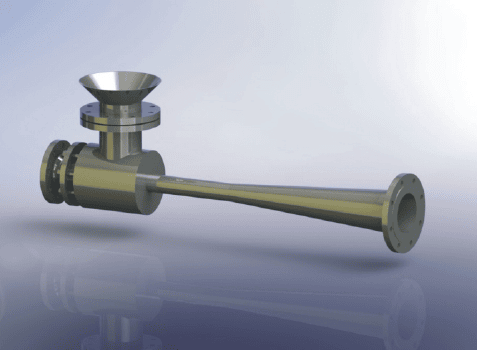
An eductor is a fluid device that uses a high-velocity jet to create negative pressure, enabling suction, mixing, conveying, or mass transfer. It offers high mixing efficiency, a broad operating pressure range, and a relatively simple structure. When a sufficient pressure difference exists between the inlet and outlet, the eductor can generate suction and draw in liquid or gas for mixing with the motive fluid.
In wastewater treatment, eductors can transfer oxygen or air efficiently into aeration tanks at different water depths. They are suitable for municipal wastewater and industrial wastewater treatment, especially where intensified treatment of high-concentration wastewater is required.
Working Principle of an Eductor
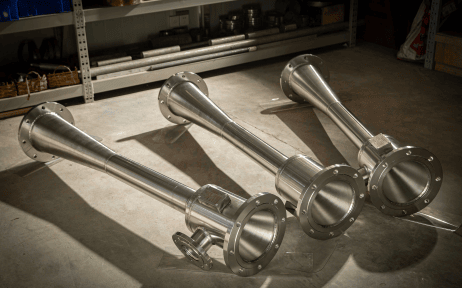
Pressurized motive fluid enters the injection chamber through the eductor inlet and forms a high-velocity jet through the nozzle. The high-speed flow creates a pressure drop in the jet region, causing the suction medium, either liquid or gas, to enter through the suction port and mix with the motive fluid. The mixed flow then passes through the diffuser section toward the outlet, where velocity decreases and pressure recovers, although the outlet pressure is usually still lower than the inlet pressure.
Selectable Materials for Eductors
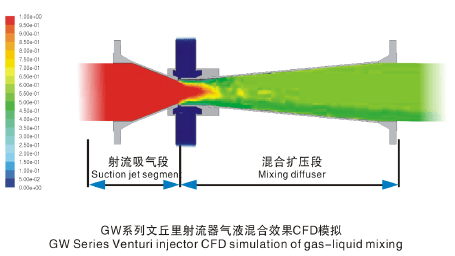
Eductors can be manufactured from SUS304, SUS316, or SUS316L stainless steel. These materials provide good resistance to corrosion, wear, temperature, pressure, and oxidation, making them suitable for a range of water treatment and industrial fluid applications.
Advantages of Eductors
Simple installation and flexible layout;
Stable long-term operation, low maintenance requirements, and reliable performance;
High mass transfer efficiency with relatively low investment and operating energy consumption;
Low noise and no secondary pollution;
Long service life with convenient operation, management, and maintenance;
Gas or liquid suction can be achieved by providing the required motive water flow and pressure.
Uses of Eductors
Aeration and sludge treatment;
Ozone dosing and ozone tail-gas reuse;
Reoxygenation of rivers and lakes;
Aquaculture;
Vacuum generation, slurry suction, heat recovery, and other industrial applications.
Types of Eductors
Based on more than 20 years of design experience, Chengdu GreenWater classifies eductors into two main categories according to their primary application objectives.
Eductors for high-efficiency mass transfer
This type of eductor is designed mainly for high-efficiency mass transfer processes. It is currently used in wastewater treatment for air aeration, pure oxygen or oxygen-enriched aeration, ozone dosing, and ozone tail-gas reuse.
Eductors for fluid suction and specialized conveying applications
This type of eductor is used across industrial and civil applications. Different operating conditions and performance requirements call for different structures and calculation methods. Liquid-liquid, liquid-gas, gas-gas, and gas-solid jet devices can be used for liquid suction, slurry suction, vacuum generation, solid powder conveying, heat recovery, and other duties. These are only typical examples among the many possible applications of eductors.
Eductor Selection
Fluid Eductors
A fluid eductor uses pressurized fluid already available on site as the motive source. In factories, civil systems, or military equipment, common pressurized media include water, oil, air, nitrogen, and steam. After entering the eductor, these fluids form a high-velocity jet that drives other media to be sucked in, mixed, conveyed, or pressurized.
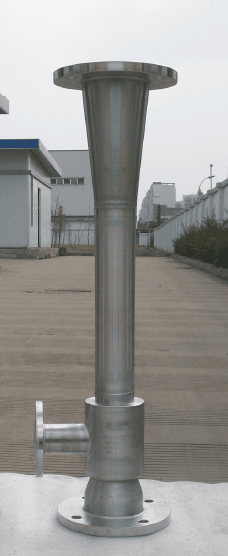
The main functions include:
Suction and conveying of liquids, powders, or particles;
Suction and conveying of air or other gases;
Vacuum generation;
Pressurization of liquids or gases;
Mixing of different fluids;
Heating of liquids with steam or hot fluid;
Absorption or scrubbing of waste gas with liquid.
Liquid-Liquid Eductors
A liquid-liquid eductor uses pressurized liquid as the motive source and generates negative pressure through a high-velocity jet to suck in, mix, and convey another liquid stream.
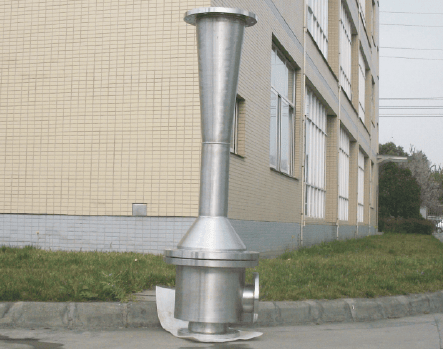
Deep-well water intake scenarios
An eductor can be used to increase the suction lift of a water pump. After the mechanical pump starts, part of the discharge water can be used as motive water for the eductor. The negative pressure generated by the jet draws water from a deep well or low-level source and lifts it into the pump suction range, enabling deep-well or low-level water intake. The actual suction flow is mainly affected by well depth, pump performance, and eductor matching.
Sediment suction and conveying scenarios
When the suction medium is sediment, an eductor with an annular nozzle structure can be used. Motive water enters the nozzle radially, while sediment is drawn in axially and conveyed. This helps reduce resistance loss and improve sediment suction efficiency. Conveying capacity is related to sediment concentration, conveying distance, lift height, and motive water pump performance.
Extended applications
This structure can also be used for fishery capture and live fish transfer, and it can assist large mechanical slurry pumps during initial startup.
Liquid-Gas Eductors
A liquid-gas eductor uses a high-speed pressurized liquid jet to generate negative pressure, drawing in gases such as air, ozone, or chlorine, then mixing them with the liquid and conveying the mixture to the downstream system.
Liquid-gas eductors can be used for enclosed-space exhaust, equipment vacuum extraction, water pump assisted startup, and system negative-pressure holding. They use motive fluids such as water or compressed air to create a high-speed jet and extract air or other gases from enclosed spaces for exhaust, vacuum generation, and pressure control.
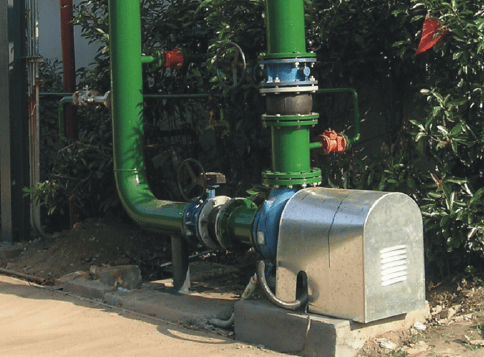
Gas exhaust applications
In industrial and civil systems, gas often needs to be removed from enclosed spaces. For example, before a water pump starts, air in the pump body or pipeline must be discharged to establish normal suction conditions. Because the volume to be evacuated during pump startup is usually small, exhaust can be completed quickly through an eductor as long as a water source or compressed air source with sufficient pressure is available on site. In hazardous locations where electric exhaust fans are not suitable, jet exhaust has no motor-driven moving parts and offers a safer and reliable alternative.
Gas extraction and pressure-holding applications
Some equipment must maintain a certain pressure while gas continuously enters or is generated during operation. In such cases, a liquid-gas eductor can be used for automatic gas extraction and pressure holding. In a wastewater treatment MBR system, for example, when pressure in the gas-water separator rises, the pressure signal controls the motive flow valve to open automatically and the eductor begins extracting gas. When the negative pressure reaches the set value, the valve closes and the eductor stops, keeping system pressure within a stable negative-pressure range.
Advantages of liquid-gas eductors
Liquid-gas eductors can usually use existing on-site water sources, compressed air, or other motive fluids directly, without requiring additional large exhaust equipment. The solution is compact, requires little space, has low investment cost, is simple to operate and maintain, and can reduce power consumption. It is suitable for water treatment, chemical processing, environmental protection, pump stations, vacuum assistance, and hazardous-area exhaust applications.
Gas Eductors
Gas eductors use compressed air, nitrogen, or other pressurized gas sources as the motive medium. They can perform liquid suction, sampling, and solid material conveying where mechanical pumps are difficult or unsuitable to use.
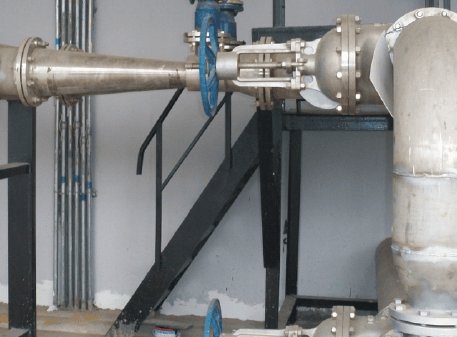
Pneumatic Extraction
When pressurized air or another gas source is available, or when a mechanical pump is difficult or unsuitable to use, a pressurized gas source can complete liquid suction tasks. The motive gas generates negative pressure through the eductor nozzle, allowing continuous or intermittent sampling of liquid from pipelines or vessels for analysis.
One typical application is undiluted liquid sampling. Pneumatic extraction eductors do not require an additional liquid medium, reducing the risk of sample dilution. They are suitable for chemical processing, water treatment, environmental monitoring, process control, laboratory analysis, and similar applications.
Pneumatic Conveying
When solids must be conveyed under dry conditions, pressurized air or nitrogen can be used as the conveying medium. Granular materials enter the suction chamber under the jet suction effect of the motive gas and then flow together with the gas. After mixing, the gas-solid mixture is pressurized through the diffuser section and conveyed to the receiving point, where gas-solid separation is completed.
Pneumatic conveying eductors are suitable for conveying powders, particles, and dry solid materials. They feature a simple structure, enclosed conveying, no mechanical moving parts, and convenient maintenance.
Gas-Solid Eductors
A gas-solid eductor uses compressed air, nitrogen, or another gas as the motive medium. The high-velocity gas jet creates suction, draws in powders, particles, or other solid materials, mixes them with the gas, and conveys them to the target location.