
 Chengdu GreenWater Co.,Ltd
Home
Library
Media
Eductor Nozzle
Eductor Nozzle
How Mixing and Aeration Are Improved Without Moving Parts
An eductor nozzle is a hydraulic mixing device installed at the end of a pressurized circulation line. In a jet aeration system, it discharges a pre-mixed gas-liquid flow at high velocity, entrains the surrounding tank liquid, and creates secondary circulation.
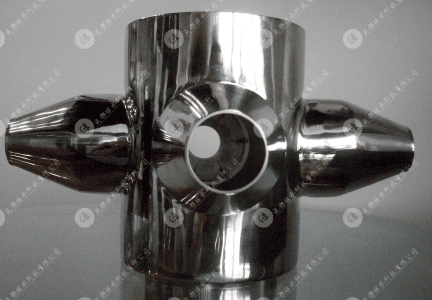
Unlike an impeller mixer, an eductor nozzle has no motor, shaft, bearing, or other moving component inside the tank. It uses hydraulic energy supplied by an external circulation pump. It is therefore particularly suitable for wastewater aeration, oxygen or ozone contact, corrosive liquids, and treatment tanks where submerged equipment is difficult to maintain.
The N-Series eductor nozzles described in Greenwater's local product files include the N20, N40, and N70 models, with operating flow rates ranging from 7.5 to 135 m³/h.
What Is an Eductor Nozzle?
An eductor nozzle is a stationary nozzle that converts the pressure of a motive stream into a high-velocity jet. When the jet enters the tank, friction and shear between the jet and the surrounding liquid draw additional water into the moving flow.
In a Greenwater jet aeration system, the operating sequence is:
- A circulation pump supplies pressurized motive water.
- An upstream Venturi injector draws in or receives air, pure oxygen, or ozone.
- The injector performs the primary gas-liquid mixing.
- The mixed flow travels through a pressurized pipe into the tank.
- The eductor nozzle discharges the mixed flow as a secondary jet.
- The secondary jet entrains the surrounding tank liquid and creates a larger circulation field.
The eductor nozzle is primarily responsible for secondary jet mixing, tank circulation, and the distribution of gas-rich liquid.
What Parts Make Up an Eductor Nozzle?
The exact construction varies by model, but an eductor nozzle contains several basic functional sections.
Connection Flange
The flange connects the nozzle to a branch pipe or distribution header. It provides a secure mechanical connection and allows the nozzle to be removed without cutting the main pipe.
The flange standard, bolt-hole arrangement, and pressure rating must be confirmed during detailed design.
Inlet Section
The inlet receives the pressurized gas-liquid mixture from the upstream pipe. Its diameter must accommodate the specified operating flow while avoiding unnecessary pressure loss.
Converging Section
The tapered body gradually reduces the flow area. This converts part of the available pressure into velocity and directs the fluid toward the discharge opening.
A smooth transition is important because an abrupt change in cross-section can increase hydraulic loss and disturb the jet.
Discharge Opening
The outlet forms a high-velocity jet. Its diameter and geometry affect:
- Jet velocity
- Jet momentum
- Entrainment of the surrounding liquid
- Effective mixing distance
- Pressure loss
- Tank circulation pattern
The actual outlet size should be confirmed from the final model drawing. The nominal flange diameter alone does not identify the nozzle's minimum hydraulic passage.
Nozzle Body
The nozzle body maintains the required hydraulic profile and provides sufficient strength for long-term submerged operation. Depending on the model, it may be manufactured from stainless steel or a corrosion-resistant polymer.
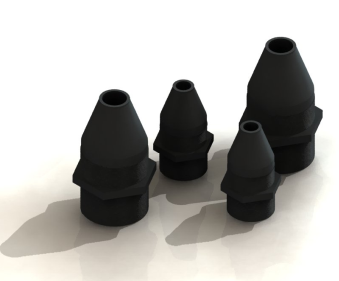
How Does an Eductor Nozzle Mix With No Moving Parts?
An eductor nozzle mixes through hydraulic acceleration, momentum transfer, shear, and turbulent entrainment.
1. The External Pump Supplies Energy
The circulation pump draws liquid from the tank and sends it through the injector and pressure pipe. The eductor nozzle therefore has no independent power source.
"No moving parts" refers to the nozzle itself. The complete system still requires a pump and, depending on the process, may also require a blower, oxygen source, or ozone generator.
2. The Flow Accelerates
As the pressurized mixed flow passes through the converging section, its velocity increases. At the discharge opening, it forms a concentrated, high-momentum jet.
3. The Jet Entrains Tank Liquid
The high-velocity jet moves through the relatively slow surrounding liquid. The velocity difference creates shear along the jet boundary.
Momentum is transferred from the jet to the surrounding liquid, drawing additional liquid into the moving flow. The total volume participating in circulation is therefore greater than the volume passing directly through the nozzle.
4. Turbulence Produces Secondary Mixing
The jet expands and becomes turbulent as it travels through the tank. Turbulent eddies mix the discharged gas-liquid flow with the surrounding wastewater.
This secondary mixing can:
- Distribute oxygen-rich liquid throughout the tank
- Increase gas-liquid contact
- Extend the effective contact path
- Reduce local oxygen-rich and oxygen-deficient zones
- Keep activated sludge and suspended solids in motion
- Reduce hydraulic dead zones
- Improve temperature and concentration uniformity
Greenwater Eductor Nozzle Specifications
| Model | Nominal Diameter | Operating Flow | K | L | D | Connection Holes | Available Materials |
|---|---|---|---|---|---|---|---|
| N20 | DN65 | 7.5-23 m³/h | 130 mm | 145 mm | 160 mm | 4-Φ14 | PVDF, SUS304, SUS316, SUS316L |
| N40 | DN100 | 18-41 m³/h | 170 mm | 170 mm | 210 mm | 4-Φ18 | PVDF, SUS304, SUS316, SUS316L |
| N70 | DN150 | 50-135 m³/h | 225 mm | 210 mm | 265 mm | 8-Φ18 | SUS304, SUS316, SUS316L |
Operating flow is only one nozzle-selection factor. It should not be interpreted as an independent guarantee of oxygen-transfer efficiency, energy savings, or mixing coverage.
Selection should also consider:
- Tank length, width, and effective water depth
- Required circulation flow
- Pump flow and available pressure
- Pipeline pressure loss
- Gas type and gas-to-water ratio
- Wastewater composition
- Suspended solids and fibers
- pH, chloride concentration, and temperature
- Required jet distance
- Nozzle quantity and spacing
- Material compatibility
- Installation and maintenance conditions

Where Can an Eductor Nozzle Be Used?
Based on the product and project information in the current directory, eductor nozzles are mainly suitable for the following applications.
Municipal Wastewater Aeration
Eductor nozzles can distribute gas-rich water through an activated-sludge tank, improve hydraulic circulation, and help keep biomass suspended.
Industrial Wastewater Treatment
Eductor nozzles can be used in pharmaceutical, biochemical, printing and dyeing, chemical, and other industrial wastewater systems. Material selection must account for the actual corrosive constituents in the wastewater.
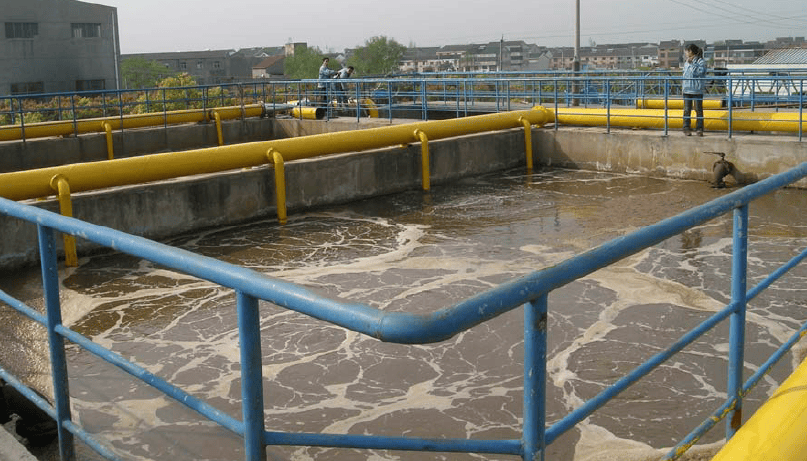
Air Jet Aeration
In an air system, the Venturi injector mixes air with circulation water. The eductor nozzle then discharges the mixed flow into the tank and performs secondary mixing.
Pure-Oxygen Aeration
Eductor nozzles can distribute oxygen-rich water through high-load biological treatment tanks. Actual oxygen utilization depends on water depth, wastewater characteristics, gas-to-water ratio, circulation flow, and nozzle arrangement.
Ozone Contact Systems
After ozone is introduced through the upstream injector, the eductor nozzle can provide secondary mixing in the contact tank. This can improve distribution and extend the contact path, but the complete system must also address ozone demand, contact time, and off-gas treatment.
Aeration-System Retrofits
Local project records include the use of eductor nozzles to replace aged, blocked, or cracked microporous aeration equipment. In suitable tanks, the piping and nozzles may be installed without completely draining the treatment basin, but this requires a project-specific construction and safety plan.
Tanks With Mixing Dead Zones
Multiple eductor nozzles can be oriented to move liquid into tank corners and other areas with weak circulation. Long or irregular tanks usually require several nozzles rather than one large central outlet.
Corrosive Wastewater
Where ordinary stainless steel does not provide sufficient corrosion resistance, PVDF, SUS316, or SUS316L may be considered. Material selection should be based on chemical concentration, temperature, and long-term exposure rather than on the general wastewater category alone.
Eductor Nozzle Case: Printing and Dyeing Wastewater Retrofit
A project documented in the local files involved a printing and dyeing wastewater treatment plant in Changzhou, China.
The original microporous aeration pipes had aged, become blocked, and cracked. Maintaining the original system would normally require draining the tank, replacing the equipment, and then restoring the biological treatment process.
The retrofit used a jet aeration system consisting of:
- Four GW3600 jet injectors
- 108 N40 eductor nozzles
- Circulation pumps with a total installed power of 127 kW
- External piping and distribution components
The wastewater treatment plant handled approximately 3,000 m³ per day. The recorded influent COD concentration was approximately 800-1,000 mg/L, while the effluent COD was no more than 80 mg/L.
The recorded specific energy consumption for COD removal was approximately 1.10-1.41 kWh/kg COD. Project records also show that mixing and aeration in the tank were relatively uniform, with no obvious dead zones.
A significant construction advantage was that the aeration tank was not completely drained during the retrofit. The N40 nozzles were distributed around the tank to create secondary jets and expand hydraulic coverage.
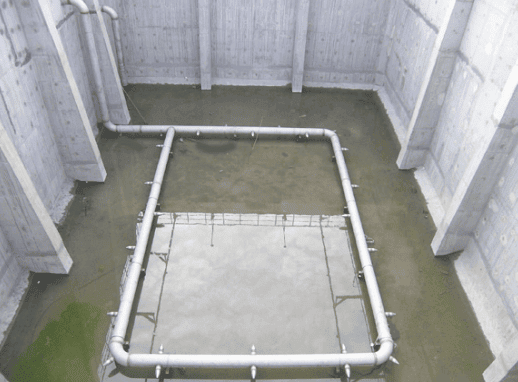
This case shows that eductor-nozzle performance depends on the complete system. Nozzle quantity alone does not determine the result. Pump capacity, injector operation, air supply, branch-flow distribution, nozzle direction, and tank geometry must all be matched.
Conclusion
An eductor nozzle is a stationary secondary-mixing device installed at the end of a jet aeration system. It accelerates a pressurized gas-liquid flow and discharges it as a high-momentum jet. The jet entrains the surrounding tank liquid, creates turbulence, and establishes a larger circulation pattern without requiring moving components inside the nozzle.
Greenwater's N20, N40, and N70 models cover operating flow rates from 7.5 to 135 m³/h. Depending on the model, available materials include PVDF, SUS304, SUS316, and SUS316L.
For reliable performance, the nozzle must be designed as part of the complete process system. Tank dimensions, pump duty, injector performance, gas supply, pipeline losses, wastewater characteristics, material compatibility, and nozzle placement should all be evaluated before the model, quantity, and installation arrangement are finalized.
