Chengdu GreenWater Co.,Ltd
Home
Library
Technical Literature
Oxygen-enriched aeration
Oxygen-enriched aeration
Oxygen Enriched Air Aeration
(OEAA)
Oxygen-enriched air reuse for PSA & membrane nitrogen generators
What drives the OEAA project
| SMC | Customer |
|---|---|
| Sales - Internal Growth? | Reduced power consumption for sewage treatment. |
| The entry point for market development? | Reduced maintenance costs for sewage treatment equipment. |
| Value-added technical services? | Wastewater treatment downtime is reduced. |
| Supplement to corporate competitiveness? | Opportunities to apply for new energy conservation and emission reduction projects. |
| Improve corporate image (environmental protection concept)? | Safe to use. |
| Technical (know-how) knowledge accumulation? | Renovation and installation without draining water. |
OEAA applicable customers
- Owned sewage treatment plant (station/workshop)
- Using activated sludge process
- There is an oxidation process in the production process
- Use air/oxygen aeration
- The distance between the nitrogen generator and the gas point is <1500m (the theoretical maximum distance is 9000m, but the pipeline is too long, which increases energy consumption and investment)
The origin of activated sludge process
In 1912, the British Clark and Cage discovered that long-term aeration of wastewater would produce sludge and significantly improve the water quality. Later, Arden and Lackett conducted further research and found that because the experimental container was not washed cleanly, the residue left on the bottle wall actually improved the treatment effect. They discovered active microbial jelly clusters and named them activated sludge.
Basic components of activated sludge process
At present, about 90% of sewage treatment plants still use this process
The first activated sludge sewage treatment plant was built in the UK in 1916
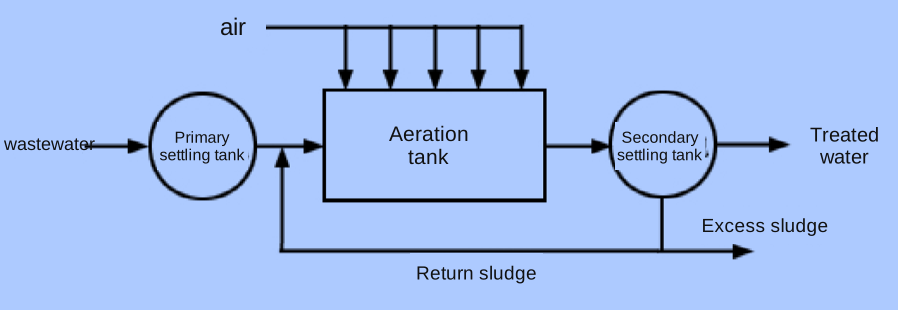
Reduce electricity consumption costs for sewage treatment
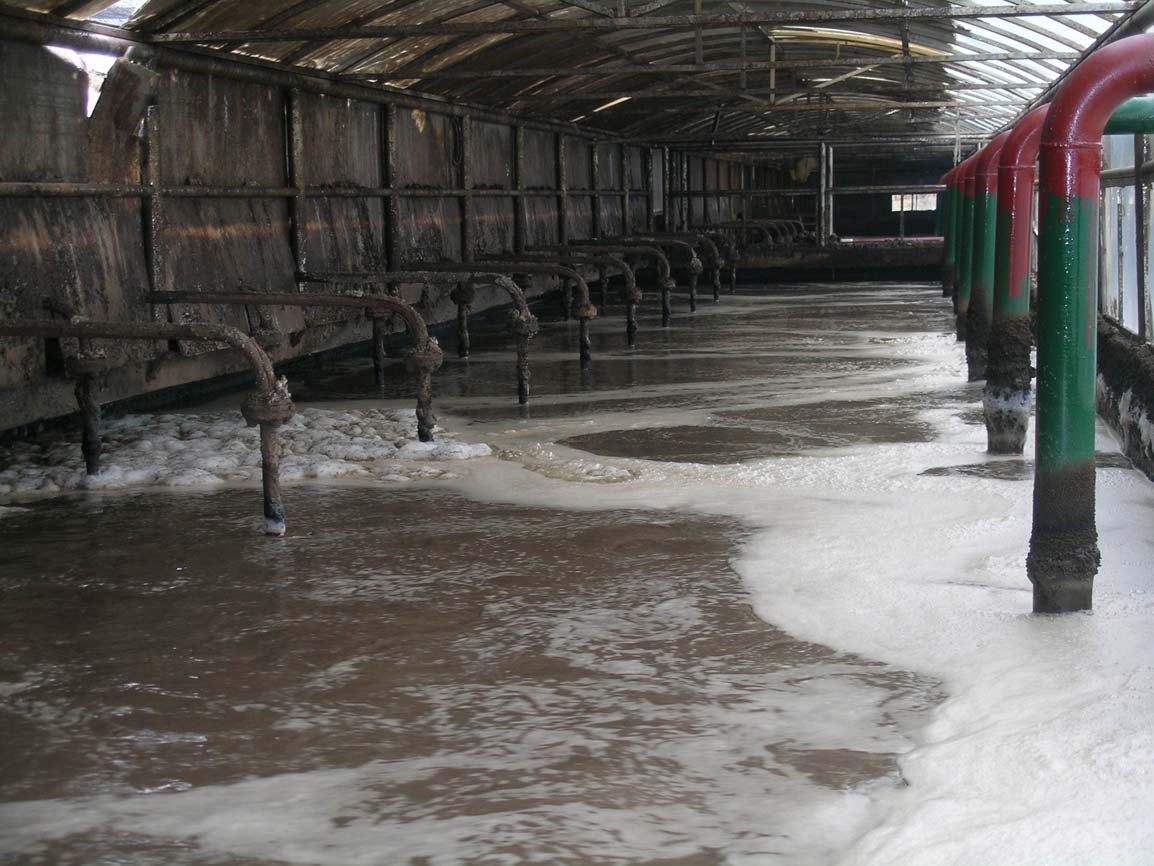
Aeration tank:
Significant gas agitation flow regime
Open - flow visible
Sealed type - the flow pattern is invisible and the air is drawn out
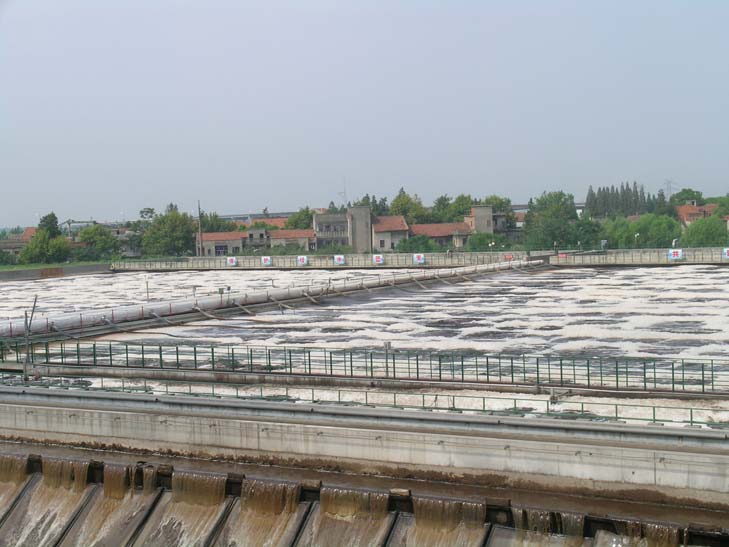
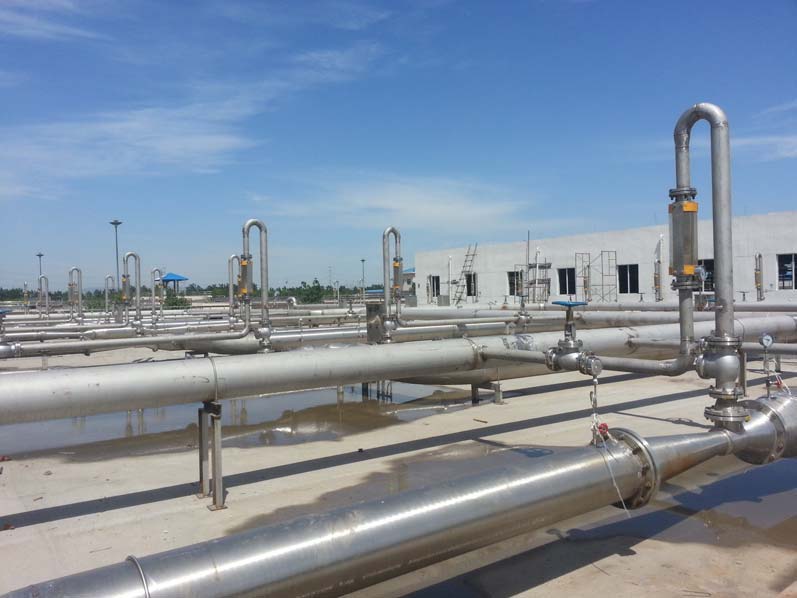
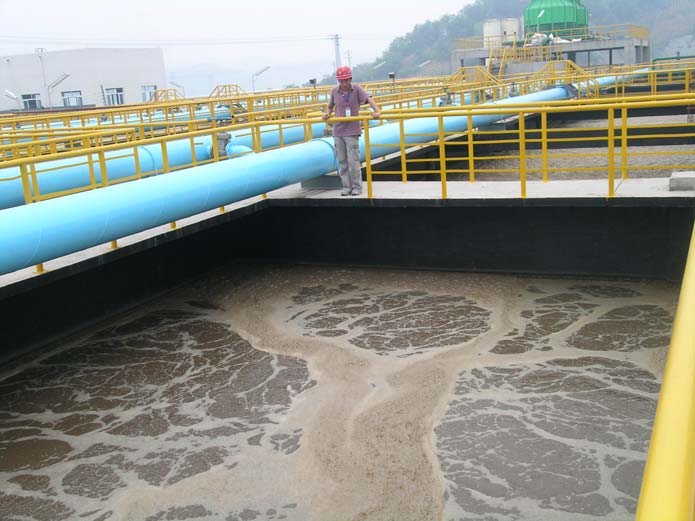
Three elements of activated sludge process
- Activated sludge - microorganisms that adsorb, oxidize and decompose organic matter
- Food - organic matter in water
- Oxygen (dissolved oxygen) - necessary for microbial survival and oxidation reactions - aeration
Reduce electricity consumption costs for sewage treatment
aeration
Aeration process that provides dissolved oxygen to water (liquid)
- Air aeration - using natural air, using pressurized and non-pressurized methods, widely used
- Pure oxygen aeration - liquid oxygen and oxygen generator are used as gas sources, pressurized gas supply, and the application is gradually expanding
- Oxygen-enriched aeration - rarely reported on engineering applications
Aeration essentials: eight Chinese characters
No more, no less, mix evenly
The importance of aeration in wastewater treatment
Compliance with emission standards: one of the most important key factors
Processing cost: 40~60% of total cost
Currently, about 90% of sewage treatment uses activated sludge method (aeration);
In this type of sewage treatment process, electricity consumption accounts for 60 to 70% of the total cost;
Aeration power consumption is 70–80 of total power consumption;
Why oxygen-enriched aeration saves energy
Oxygen transfer efficiency difference:
Pure oxygen transfer efficiency > oxygen-enriched air transfer efficiency > air transfer efficiency
Oxygen transfer efficiency = the amount of oxygen actually absorbed by the water body / the total amount of oxygen added %
Two-film theory equation
Oxygen transfer rate Rm
Rm=KLa×(Cs-Cp)
Oxygen concentration difference, the larger this value is, the higher the oxygen transfer rate is.
- Kla: overall mass transfer coefficient (related to aerator, water temperature, water quality, etc.)
- Cs: saturated dissolved oxygen, the maximum value that dissolved oxygen in water can reach under specific conditions
- Cp: operating dissolved oxygen, the dissolved oxygen value required for water treatment operation
Henry's Law
Cs=H·Px
- Cs: saturated dissolved oxygen
- H: Henry's constant
- Px: gas component partial pressure
Dalton's Law of Partial Pressure:
The partial pressure of a gas component is proportional to the volume percentage it occupies
Dalton's Law of Partial Pressure:
The oxygen partial pressure of oxygen-enriched air is greater than the oxygen partial pressure of air.
Henry's Law:
The saturated dissolved oxygen concentration Cs of oxygen-rich air is greater than the saturated dissolved oxygen concentration Cs of air
Two-film theory equation Rm = KLa × (Cs − Cp)
The oxygen transfer rate of oxygen-enriched aeration must be greater than that of air aeration
Take 35% oxygen-enriched air as an example
| Dalton's law of partial pressures | Example: At 1 atm, the oxygen partial pressure of air is 21kPa, and the oxygen partial pressure of 35% oxygen-enriched air is 36KPa |
| Henry's Law Cs=H·Px | At 1 atmospheric pressure, the saturated dissolved oxygen Cs of air aeration is 9.08, and the saturated dissolved oxygen Cs of oxygen-enriched aeration = (36/21) × 9.08 = 15.57 |
| Two-film theory equation Rm = KLa × (Cs − Cp) | The oxygen transfer rate of oxygen-enriched aeration is compared with the oxygen transfer rate of air aeration, assuming: KLa is equal and Cp is 2 |
Why oxygen-enriched aeration saves energy
- High oxygen transfer efficiency = high oxygen utilization rate
- The total amount of air supply required is significantly reduced
- Reduced power used by aeration equipment
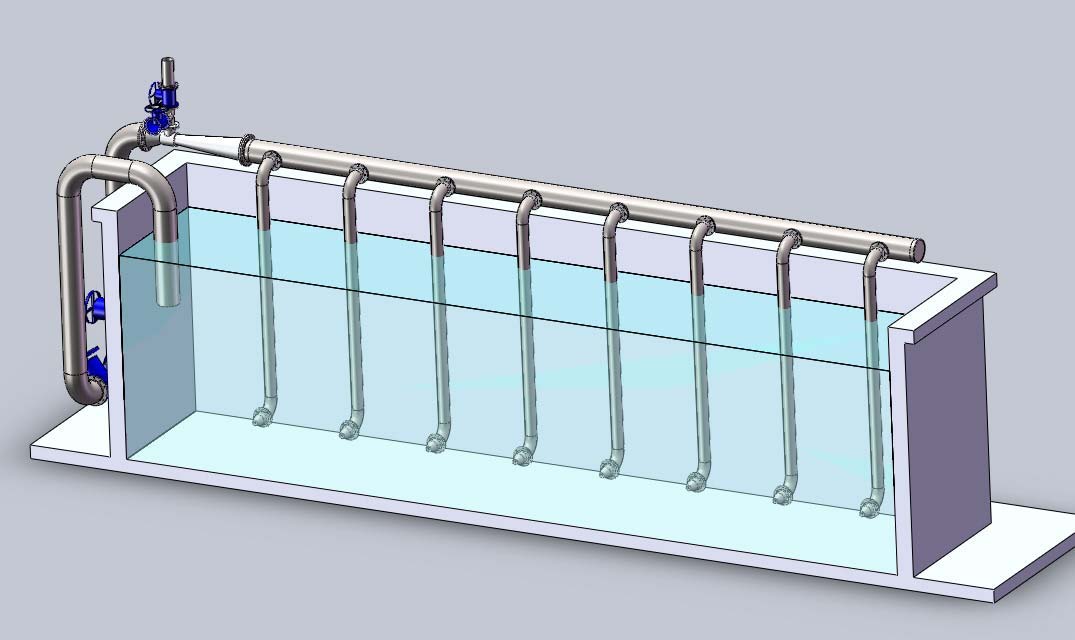
Why Choose GW Jet Aeration System
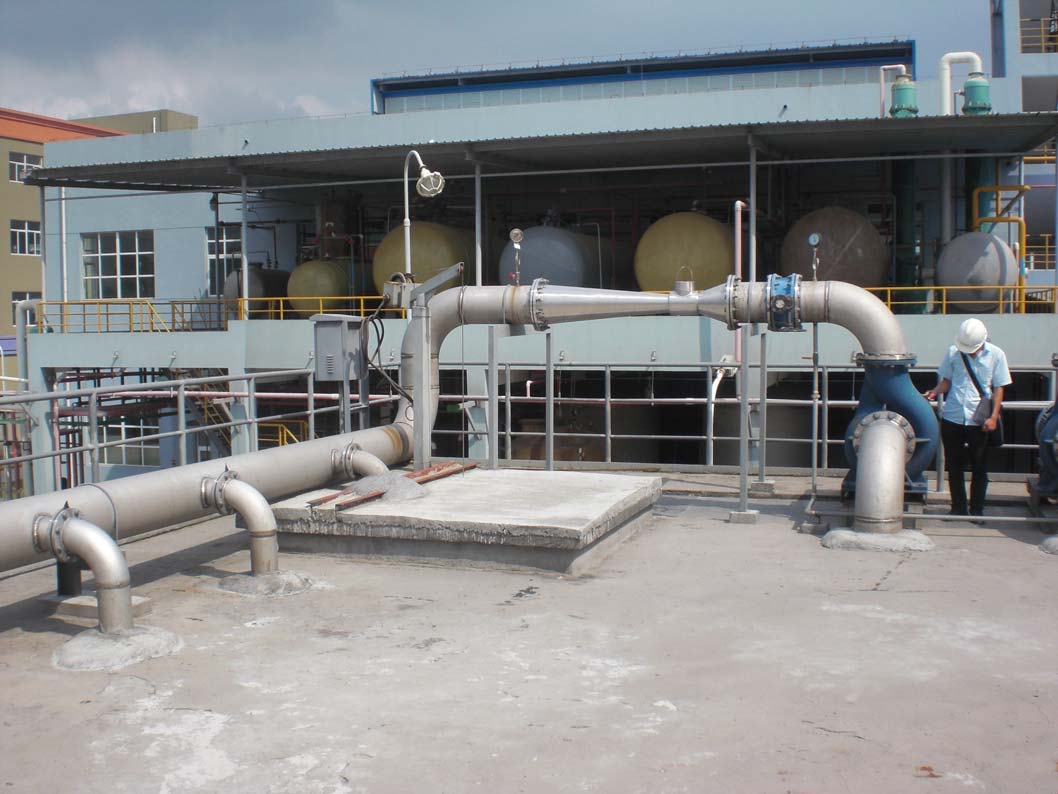
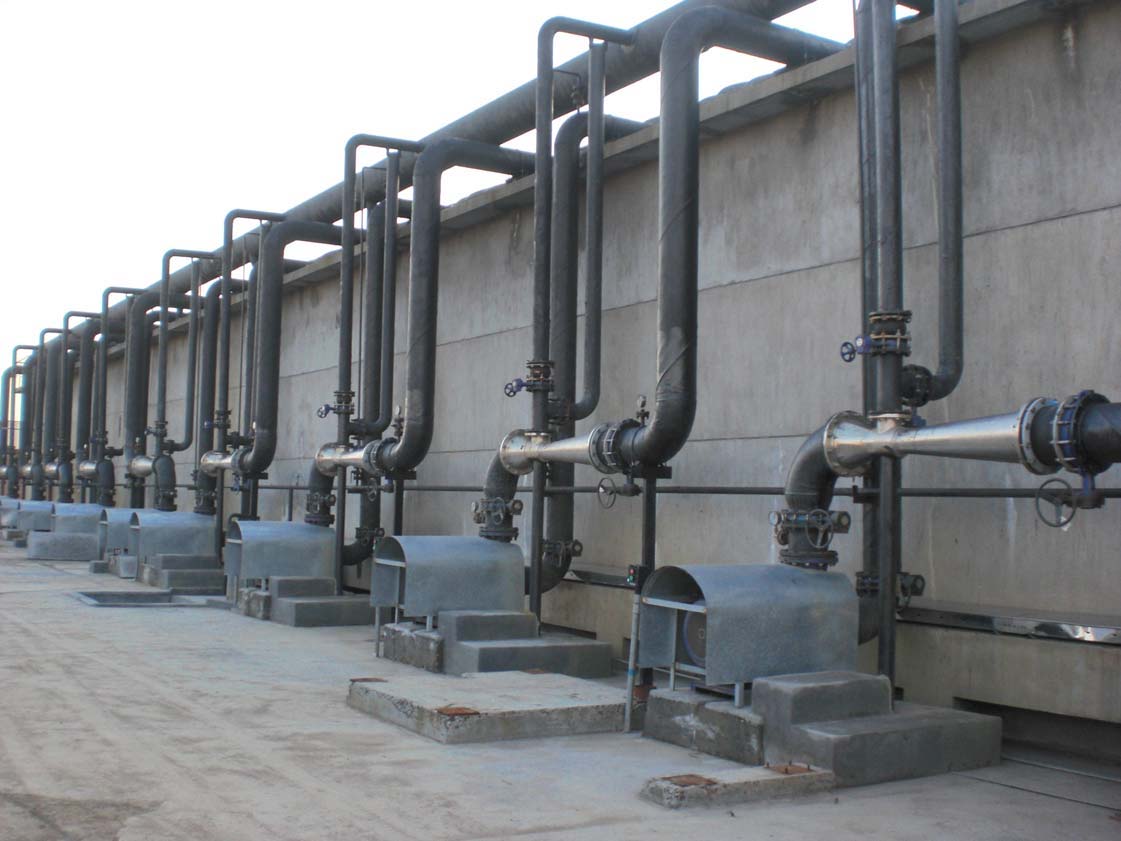
Function: Oxygen-enriched air delivery and oxygen mass transfer equipment in one
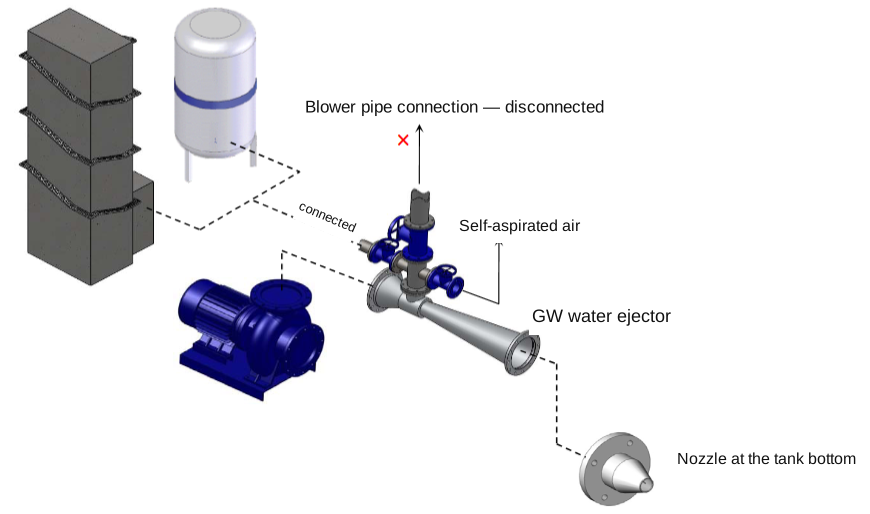
Why Choose GW Jet Aeration System
| GW water ejector oxygen transfer efficiency | Diffused aeration oxygen transfer efficiency |
|---|---|
| Air: ≥30% | Air: (medium-bubble) ≤5% (fine-bubble) ≤10% |
| Oxygen-enriched air: ≥30% × 1.9 (36%) =57% |
Oxygen-enriched air: (medium-bubble) ≤9.5% (fine-bubble) ≤19% |
Why Choose GW Jet Aeration System
Example:
The amount of oxygen required/replenished by the customer's aeration tank is 50kg/h;
The oxygen-enriched air volume of the nitrogen generator is 200m³/h; oxygen content = 35% × 200 × 1.41 = 98.7kg/h.
Using GW water ejector: Oxygen transfer amount=98.7×57%≈56kg/h
Fine-bubble diffused aeration: oxygen transfer = 98.7 × 19% ≈19kg/h
Why Choose GW Jet Aeration System
| GW jet aeration | Diffused aeration |
|---|---|
| Gas transportation: negative pressure suction, the gas and water are mixed and then enter the aeration tank; | Pressurized air supply - material problem; oil-proof seal problem; |
| No need to consider safety factors | Safety factors need to be considered |
GW jet aeration system installation without draining the tank